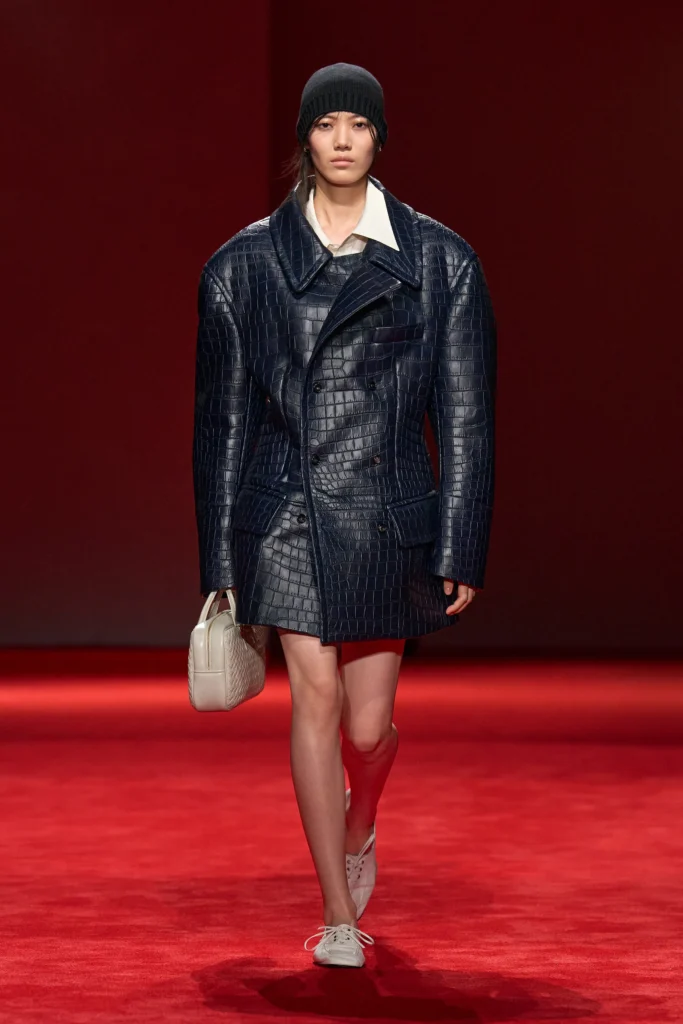


Louise Trotter presented her second collection for Bottega Veneta inside the brand’s headquarters at Palazzo San Fedele, located between Milan’s La Scala and the Duomo. The setting reflected the focus of the season. After a year living in Milan, the British designer turned her attention to the city itself – its architecture, its atmosphere, and the contrast between restraint and sensuality that defines its character.
Trotter described the starting point as a dialogue between Brutalism and sensuality. Milan’s architecture often feels severe and monumental, yet beneath that surface lies a quieter elegance. She also observed something increasingly rare in many cities – people in Milan still dress with intention, treating clothing as an important part of daily life.
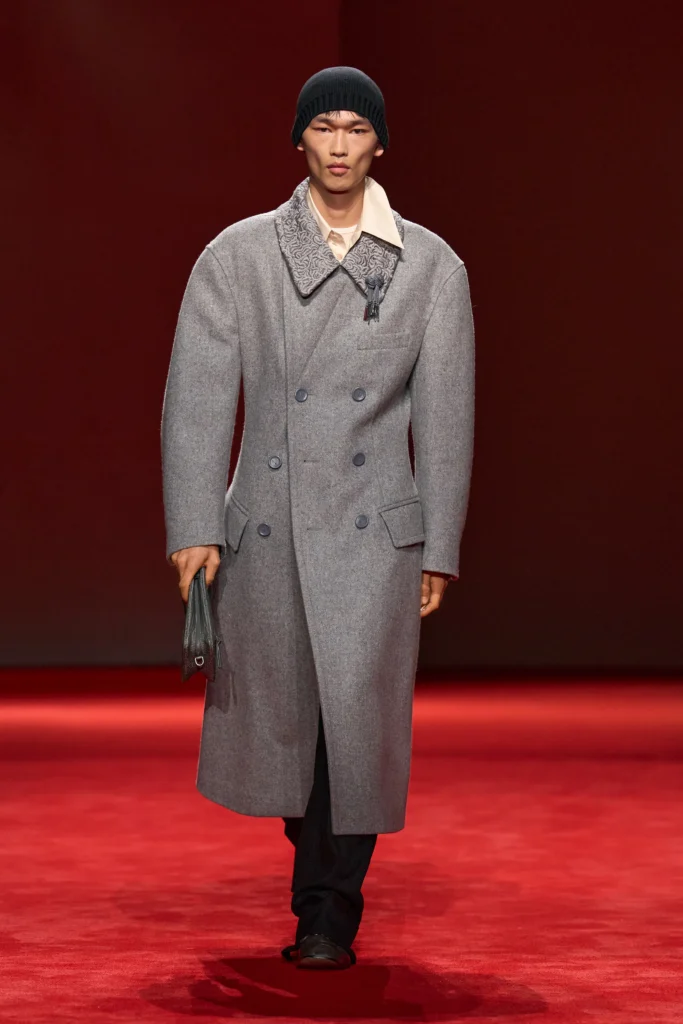
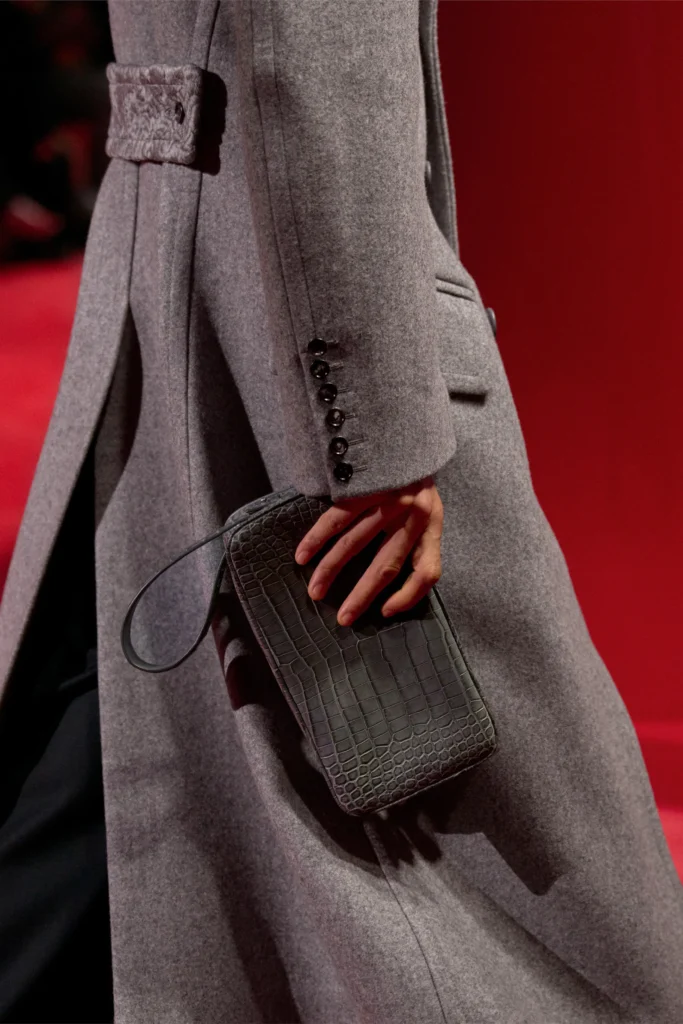
The show unfolded gradually. It began with sculptural tailoring in a restrained palette, before moving toward dresses built from richer textures and more saturated colors. The tailoring introduced a subtle shift from her debut collection. Jacket shoulders appeared softer and more rounded, a refinement that Trotter said came in response to feedback from last season. Trousers were cut with generous volume, while wrap skirts were suspended from structured leather belts – a construction inspired by the mechanics of handbag design. Menswear followed the same curved silhouette, though layered polos and cropped ribbed knits gave the men’s looks a more relaxed character.
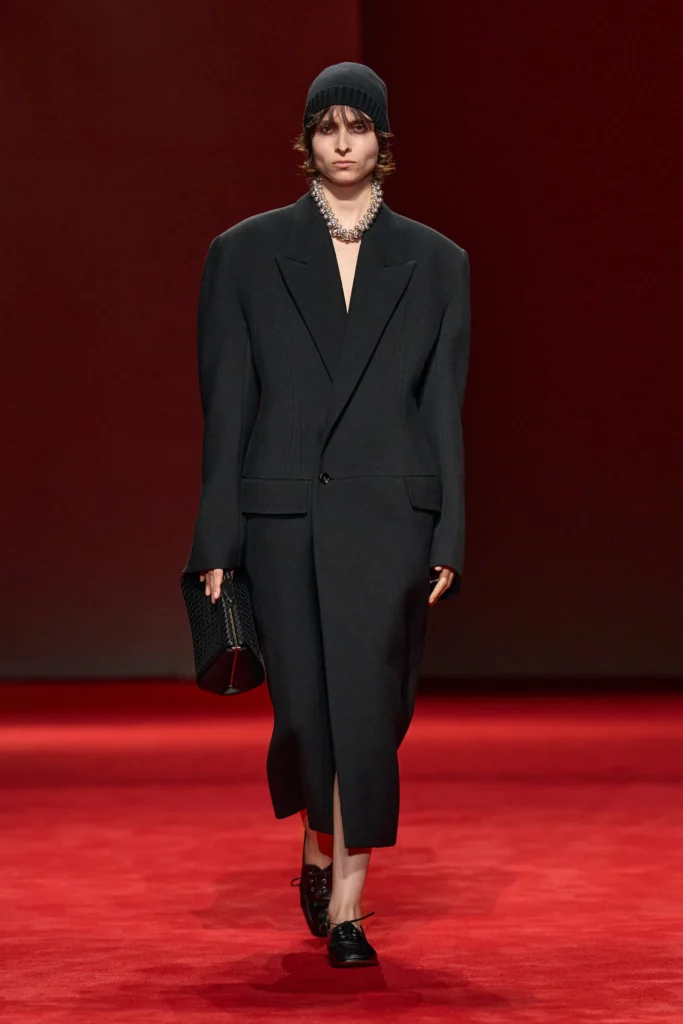
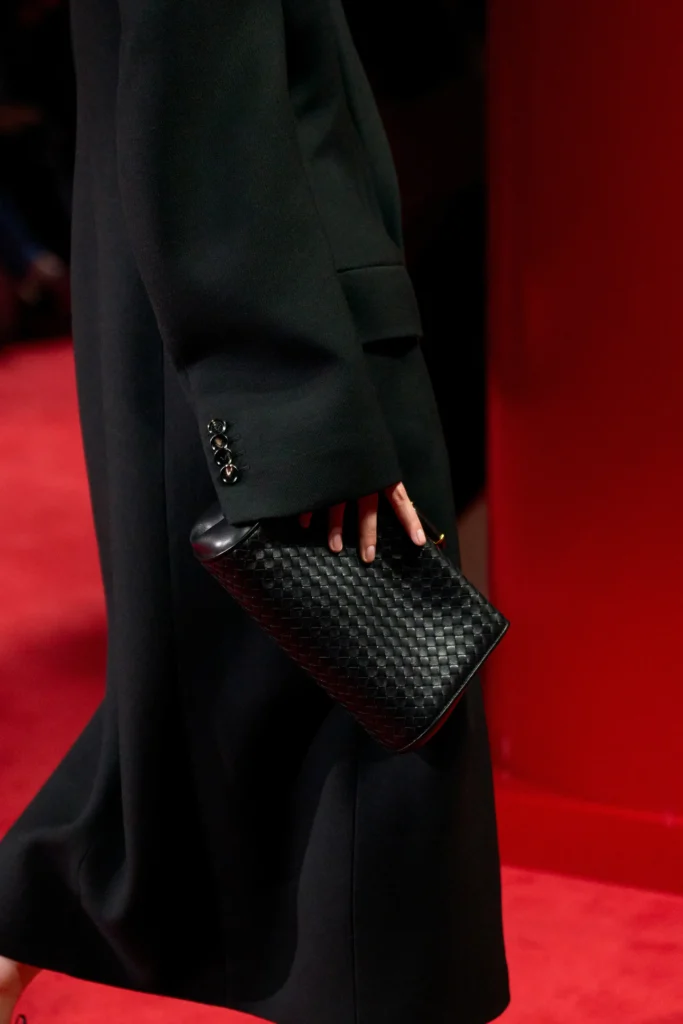
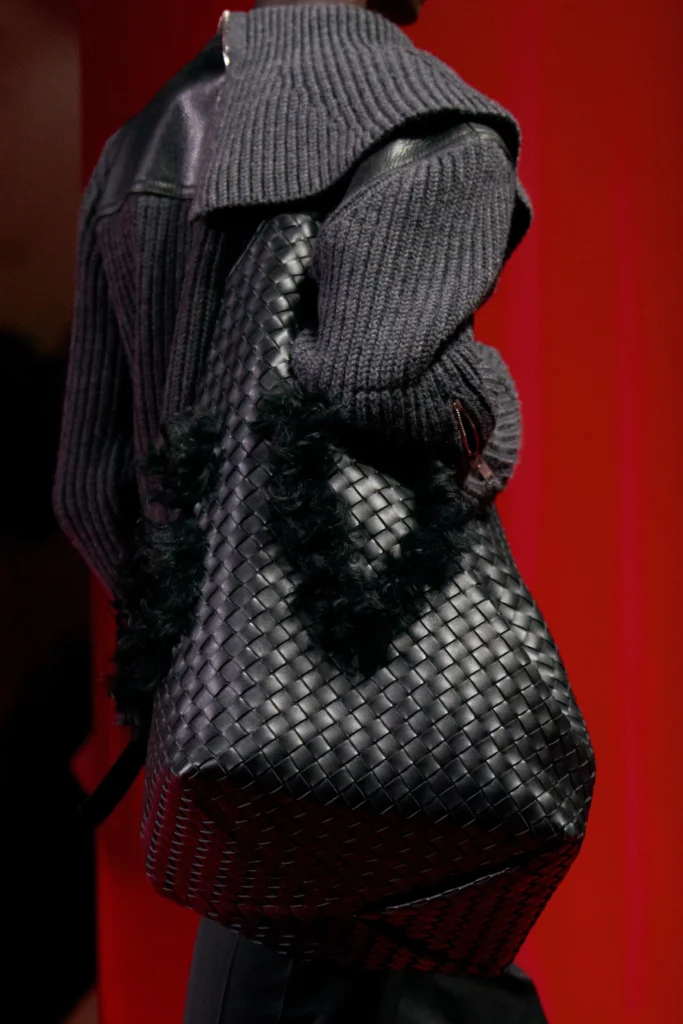
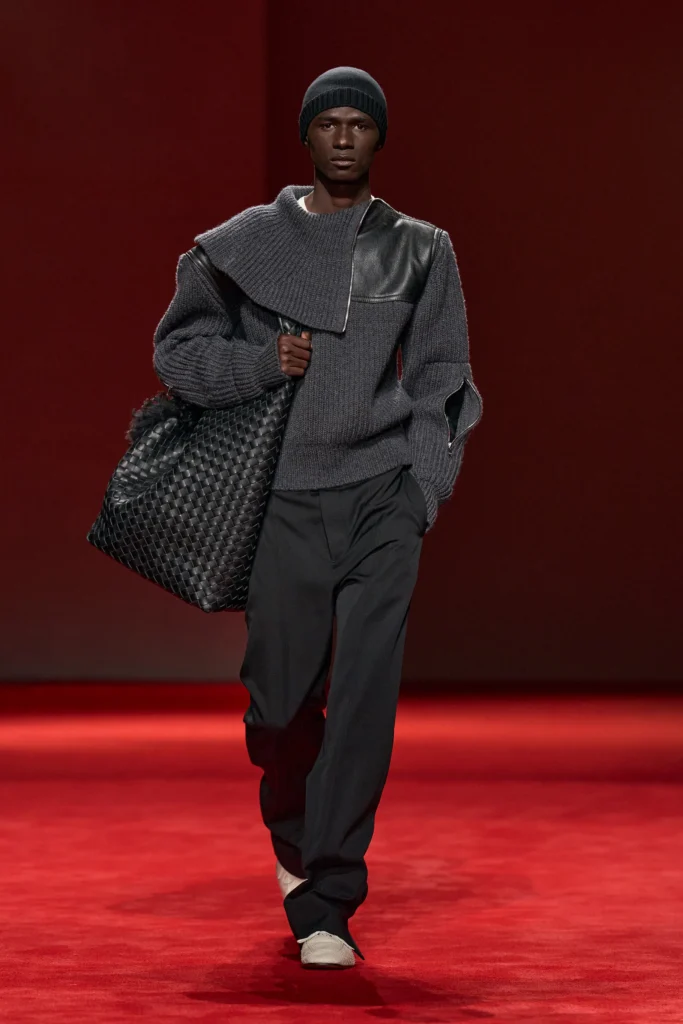
As the collection progressed, material experimentation became central. Classic silhouettes were reinterpreted through unexpected surfaces. A traditional peacoat appeared in matte crocodile leather, in intrecciato weaving finished with soft fringe, and in velvet carved to resemble astrakhan. Many fabrics created deliberate ambiguity. Silk threads rippled like curly shearling, real shearling was brushed to mimic fox fur, and technical materials joined the mix as well. Among them was the shaggy fiberglass first introduced in Trotter’s debut collection, this time rendered in a vivid bubblegum pink that brushed the ankles.
The silhouettes often enveloped the body, obscuring its shape. Despite their volume, Trotter emphasized their lightness and ease of movement.
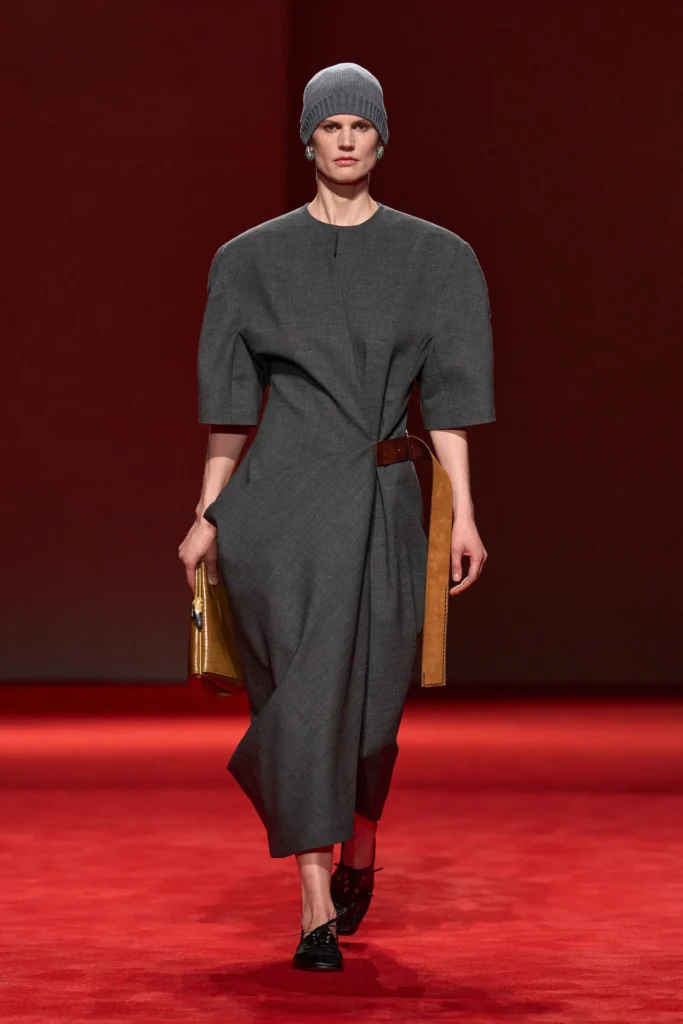
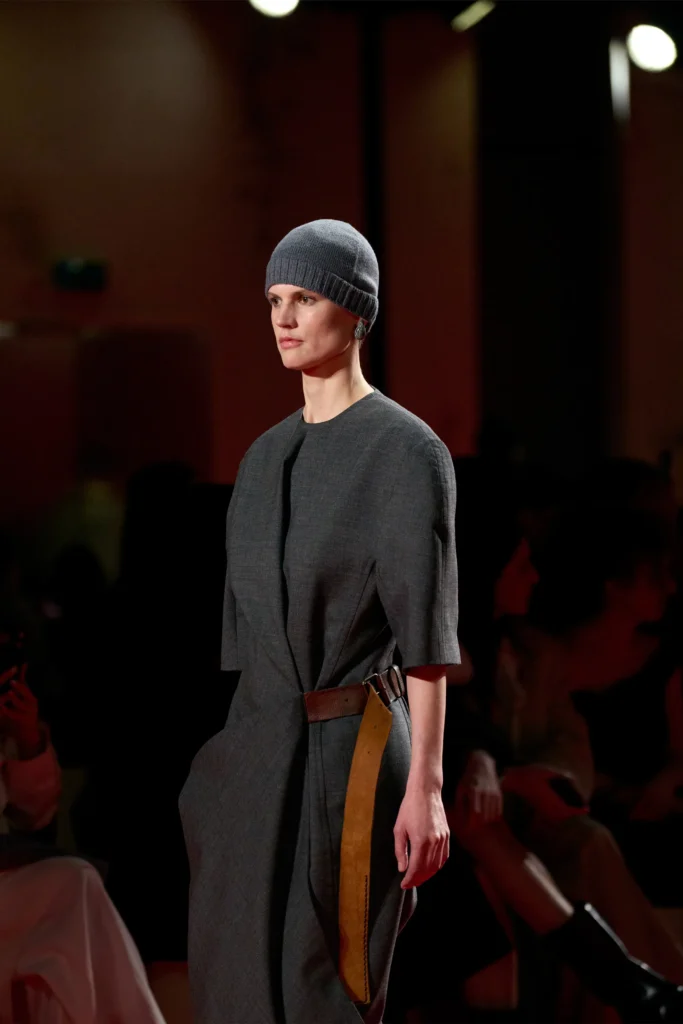
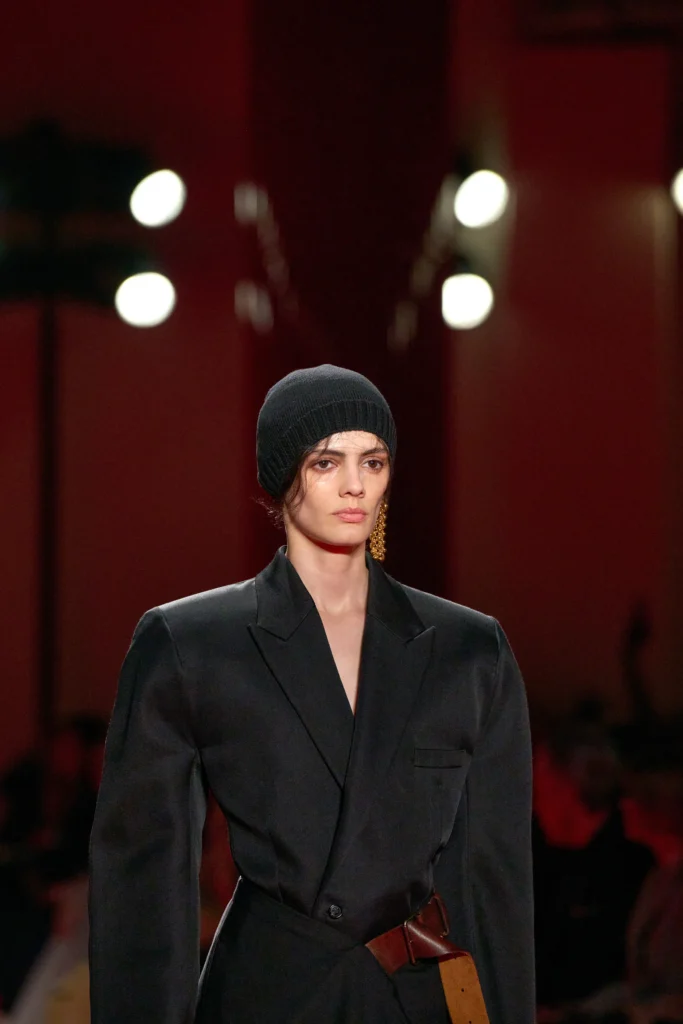
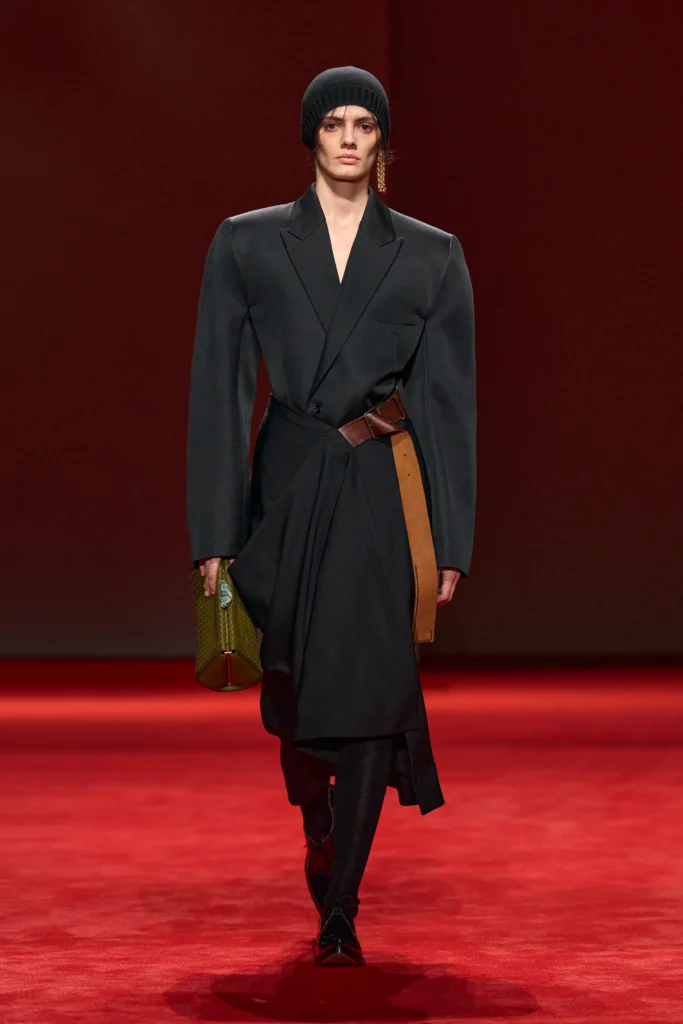
Accessories played an important role in shaping the mood. Nearly every look was completed with a hat – simple knitted beanies or fringed caps that evoked the romantic imagery of Franco Zeffirelli’s 1968 film Romeo & Juliet. Tunic-length dresses and coats, worn bare-legged or layered over sturdy leggings, reinforced the sense of relaxed elegance.
At the center of the collection’s more sensual chapter stood one of its most striking pieces: an asymmetrical black-and-white fringed skirt spiraling down the legs, paired with a simple knit tank. The look demonstrated the strength of reduction – a reminder that sometimes the most memorable statement emerges from the simplest elements.
Source – Vogue.