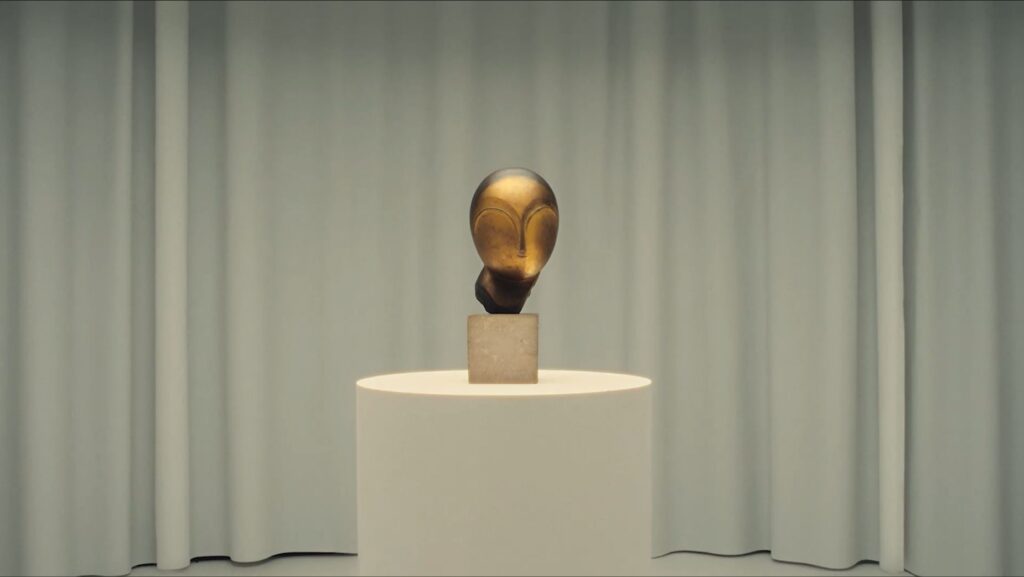


In an art world often driven by spectacle, scale and constant novelty, one of the season’s most discussed works measures only 27 centimeters. Constantin Brancusi’s Danaïde has returned to the center of attention after Christie’s presented the sculpture in a campaign featuring Nicole Kidman and later sold it for $107.6 million, setting a new auction record for the artist.
What makes Danaïde compelling is not its size, but its simplicity.
Created in 1913 and inspired by Hungarian artist Margit Pogány, the sculpture moved away from traditional portraiture. Rather than reproducing realistic details, Brancusi transformed the face into a distilled visual language – elongated eyes, softened contours and an expression suspended somewhere between reality and abstraction.
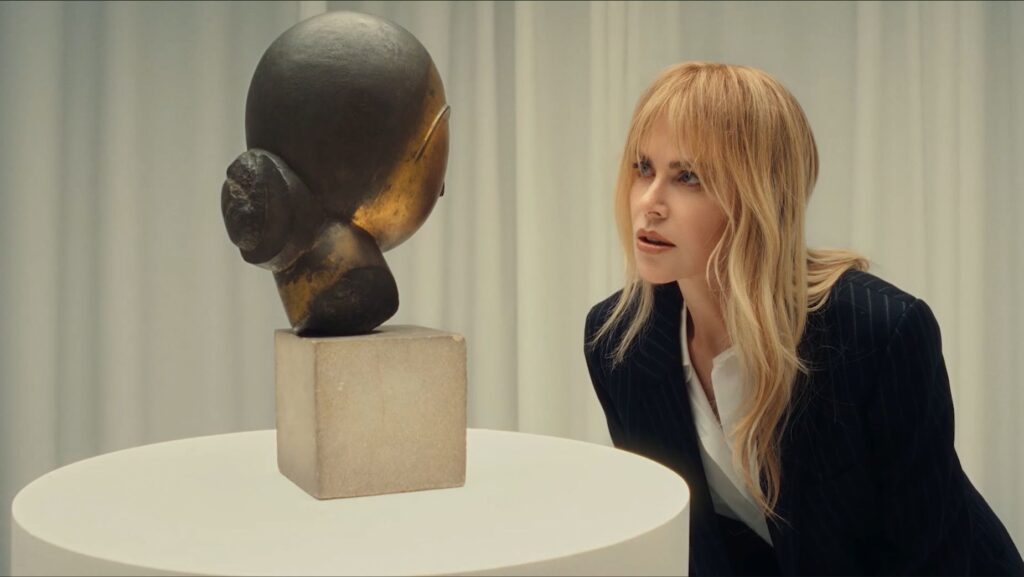
His approach changed sculpture itself. At a time when many artists pursued precision and realism, Brancusi focused on something less literal: capturing essence rather than appearance. That idea would later become one of the foundations of modern art.
More than a century later, Danaïde still feels remarkably current. Its silhouette could exist just as naturally within a contemporary gallery, a fashion campaign, or a minimalist interior. The visual language Brancusi introduced – reduction, clarity and emotional presence – continues to shape fashion, design and luxury aesthetics today.
Perhaps that is why the work resonates once again. In a culture saturated with images, Danaïde creates impact through restraint.
Sometimes presence comes from what remains after everything unnecessary disappears.