For decades fashion operated through seasonal instructions – shorter skirts one season, stronger shoulders the next. At Prada, Miuccia Prada and Raf Simons proposed a different perspective. Instead of defining what women should wear, the collection focused on how women actually dress. The questions behind the show were simple and familiar: what works together, what can be layered, what happens if a piece is worn differently.
To demonstrate this idea, the designers chose an unusual format. Only fifteen models walked the runway, but each appeared four times in different combinations of the same garments. Sixty exits gradually revealed how a small wardrobe can shift through layering and reinterpretation. The concept became clear as the show progressed – not as a stylistic trick, but as a reflection of everyday dressing and the role of personal imagination.
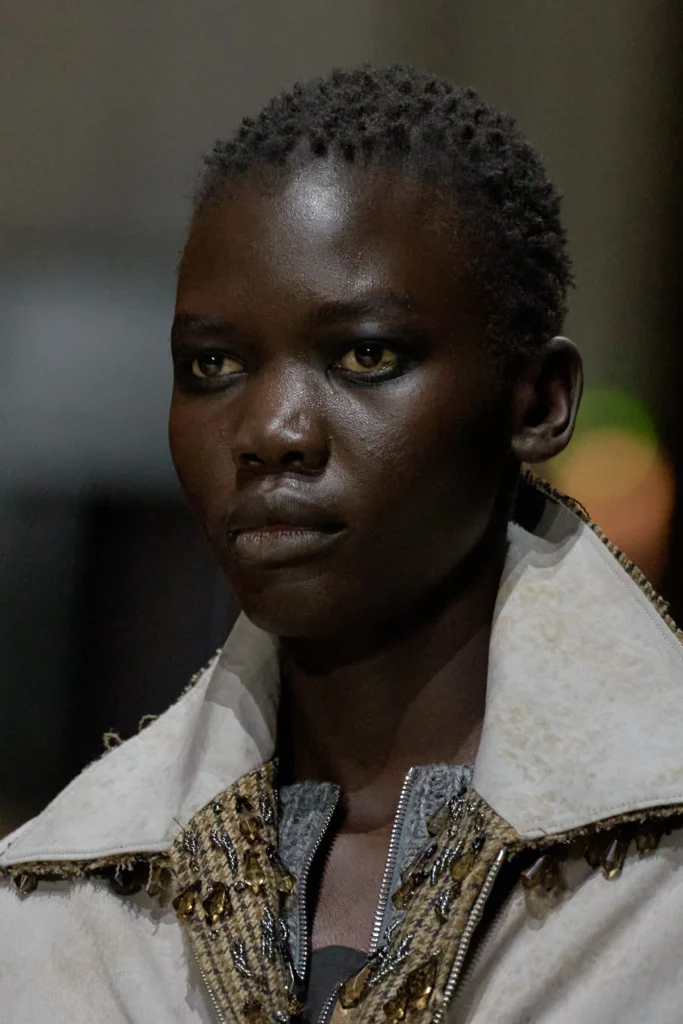
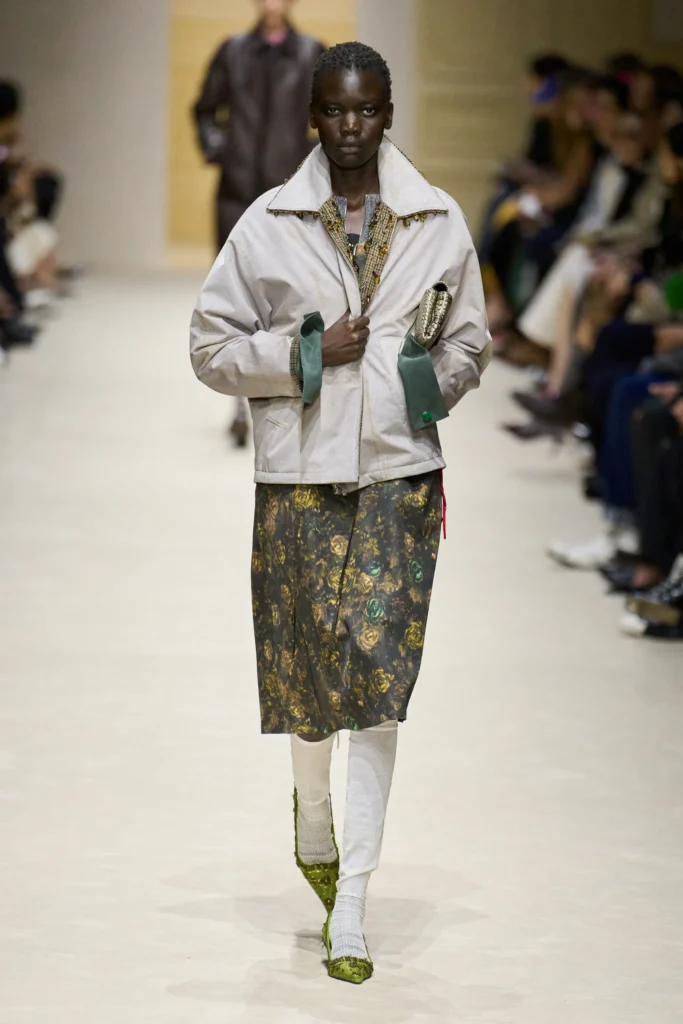
Julia Nobis illustrated the structure of the show in the opening sequence. She first appeared in a long black coat, styled with a neatly wrapped hand-knit scarf. On her second pass the coat disappeared, revealing a heavy zip sweater. Later the sweater was gone as well, exposing what initially seemed to be a skirt but turned out to be a dress. On the final exit the foundation of the entire look became visible – a light, translucent shift layered over modest undergarments. Similar transformations unfolded with models such as Bella Hadid, Liu Wen, and Amanda Murphy.
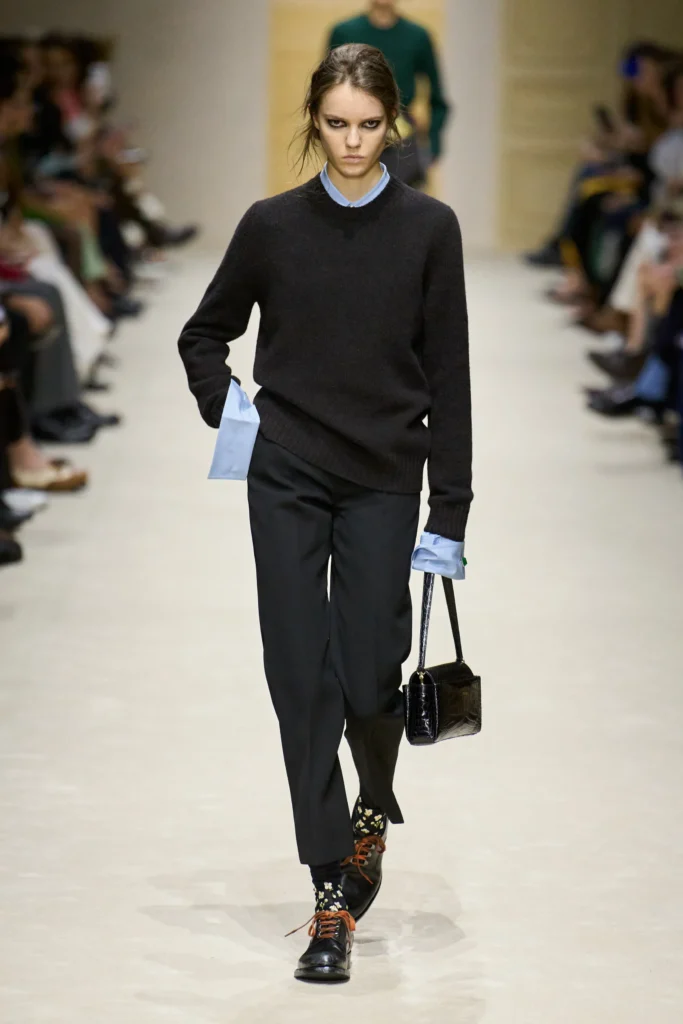
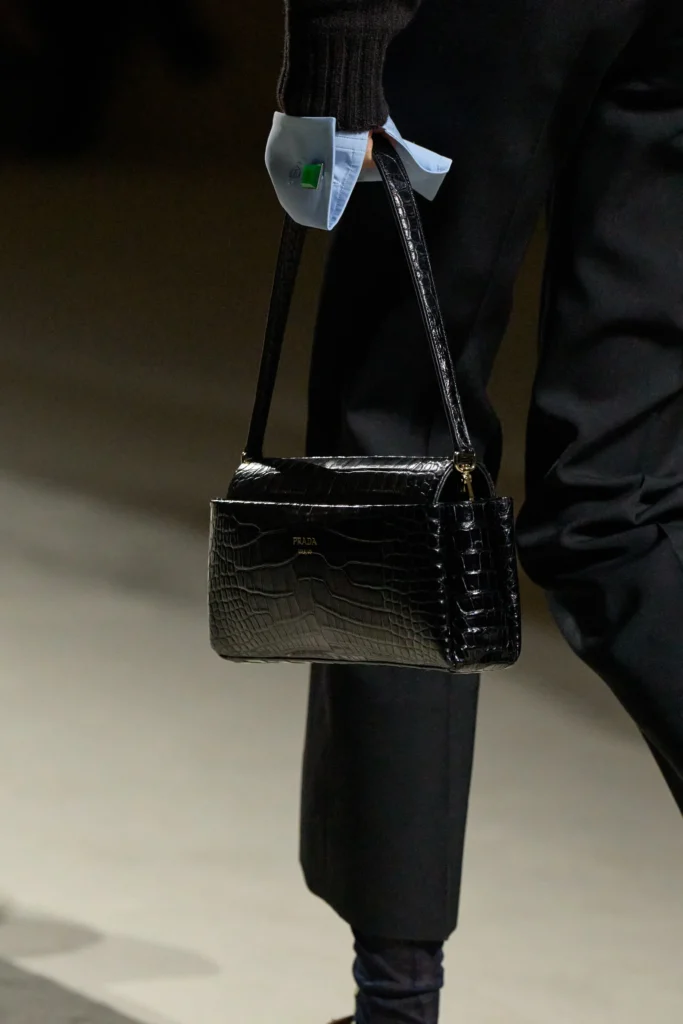
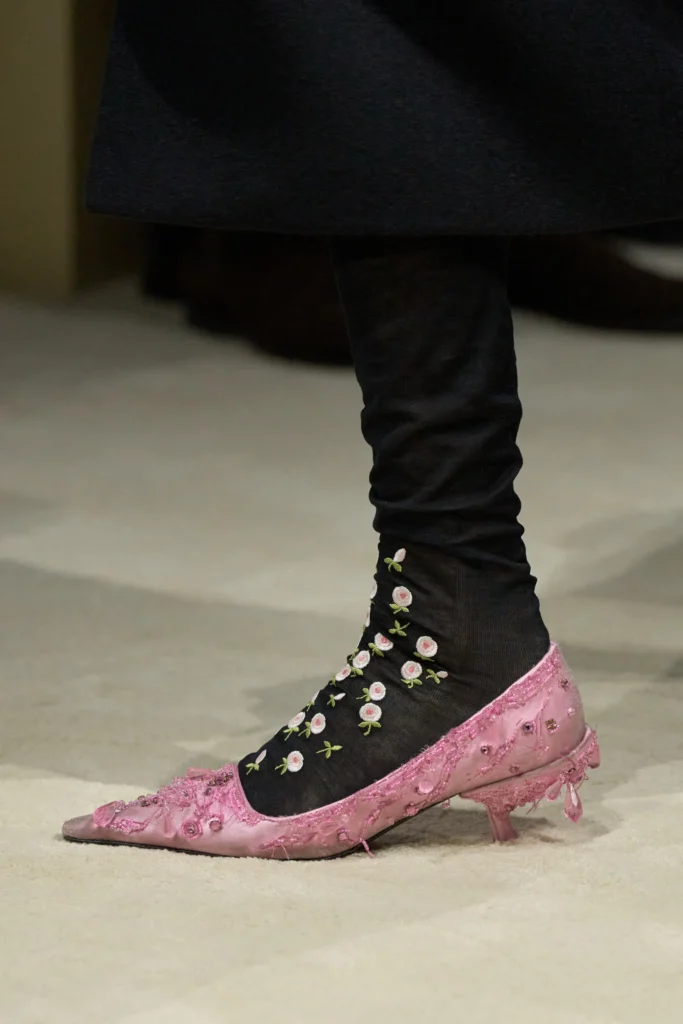
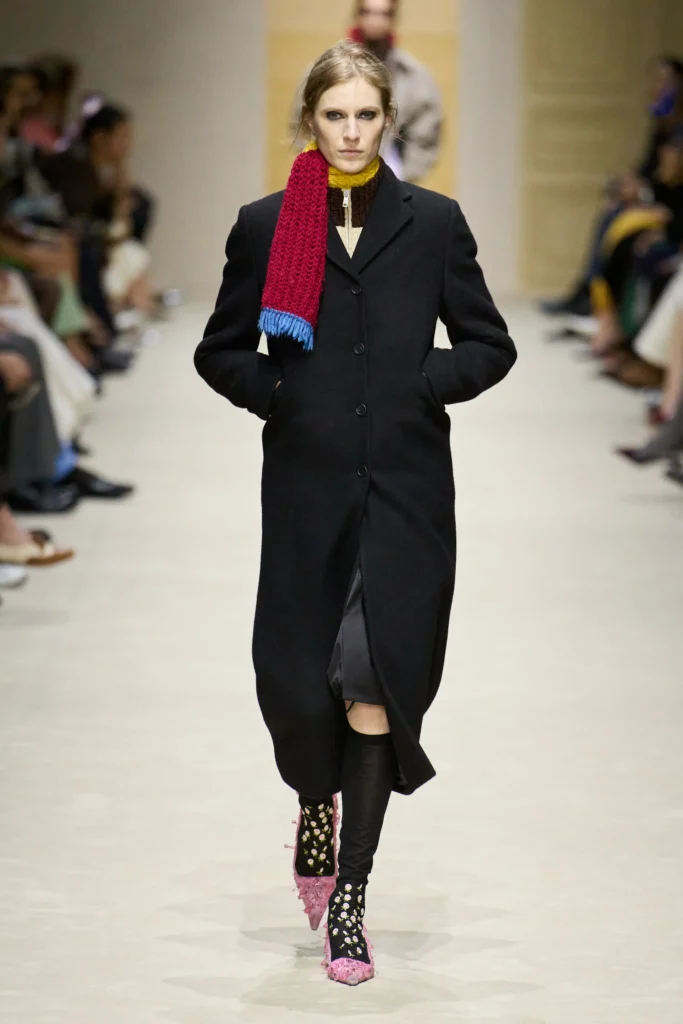
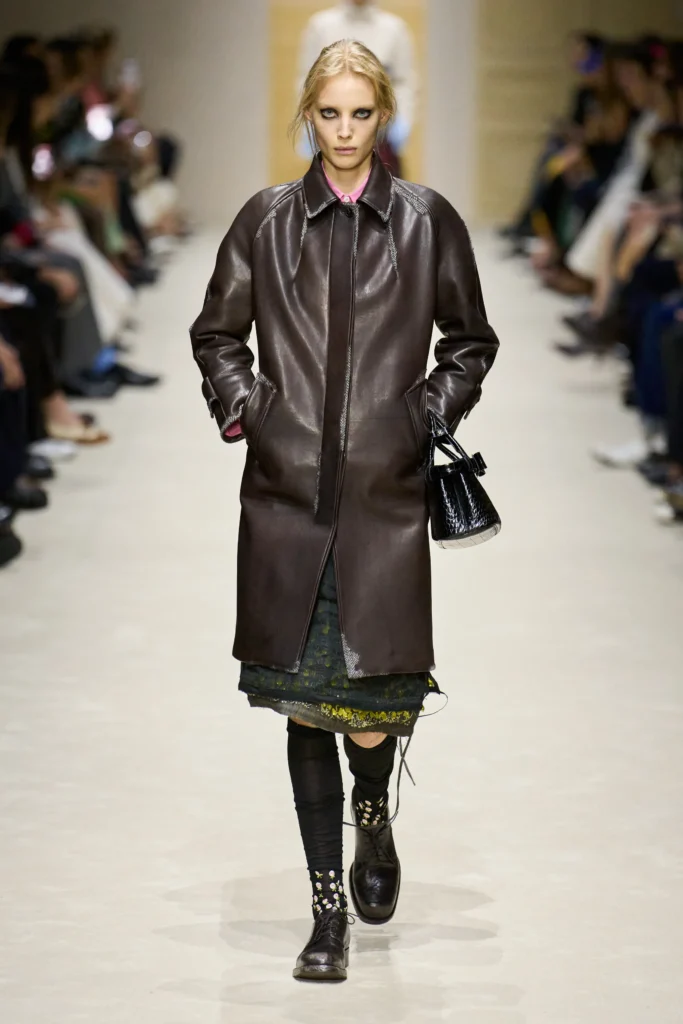
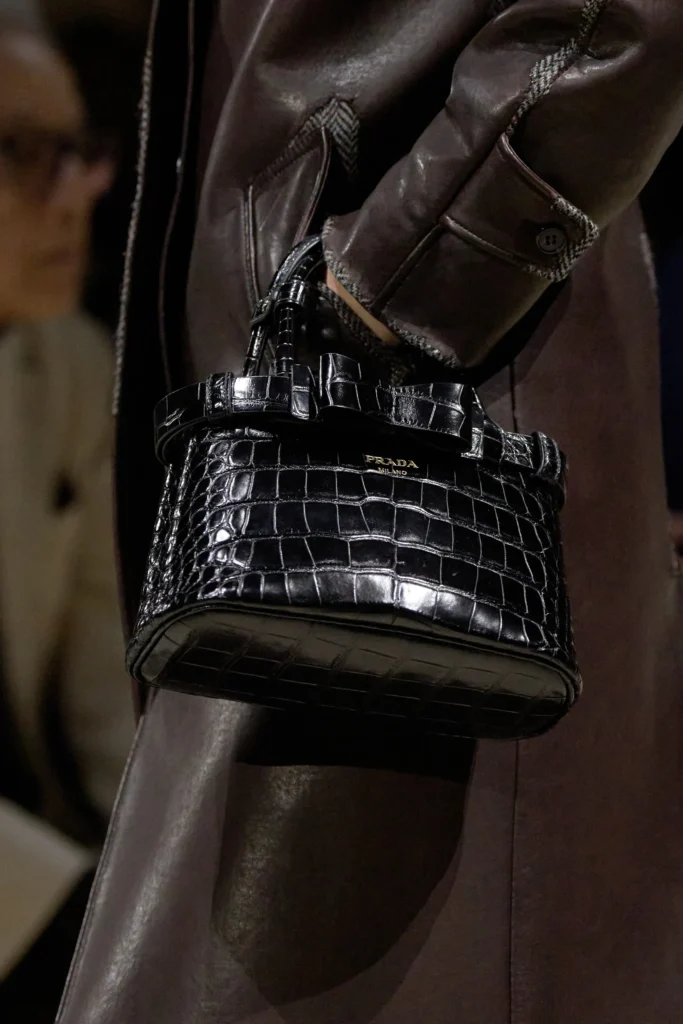
Many garments carried signs of wear. Shirt cuffs looked slightly stained, hems were frayed, threads hung loose. Harrington jackets appeared as if their wax coating had aged and peeled back, revealing houndstooth beneath. Even the heels of sturdy oxford shoes were intentionally scuffed. These imperfections did not diminish the garments. In a moment when the secondhand market continues to expand, visible traces of time can increase the appeal of clothing rather than weaken it.
Prada and Simons also revisited the house’s own archives. Floral prints from earlier collections reappeared, as did particular tones of pink duchesse satin recognizable to longtime observers of the brand. Small gestures referenced familiar Prada signatures – the way models held their coats, or the slightly slouched socks embroidered with flowers.
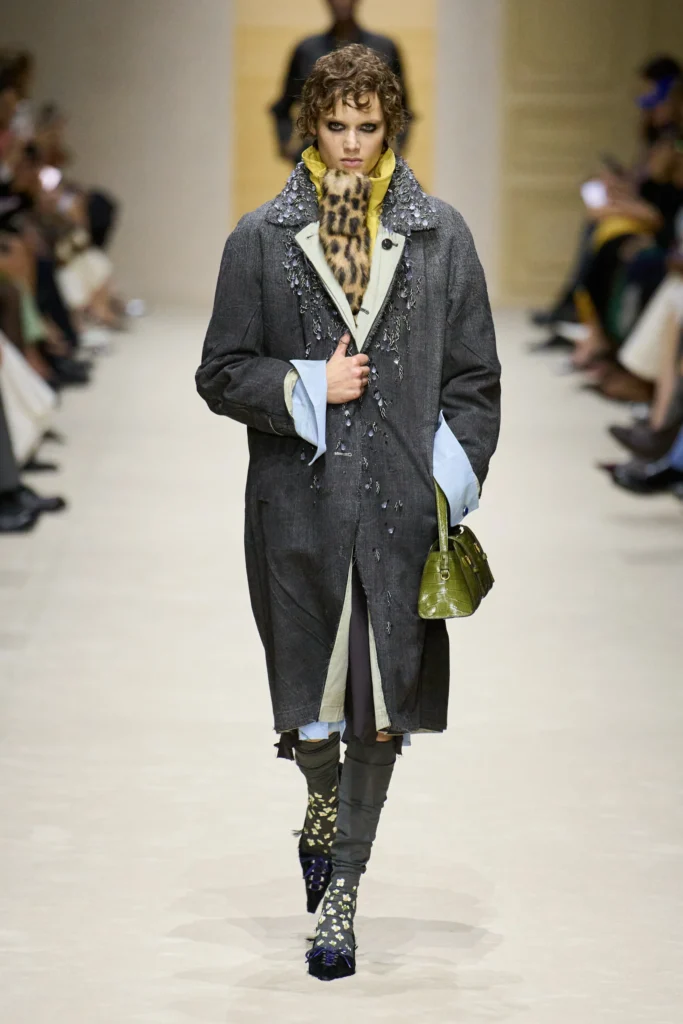
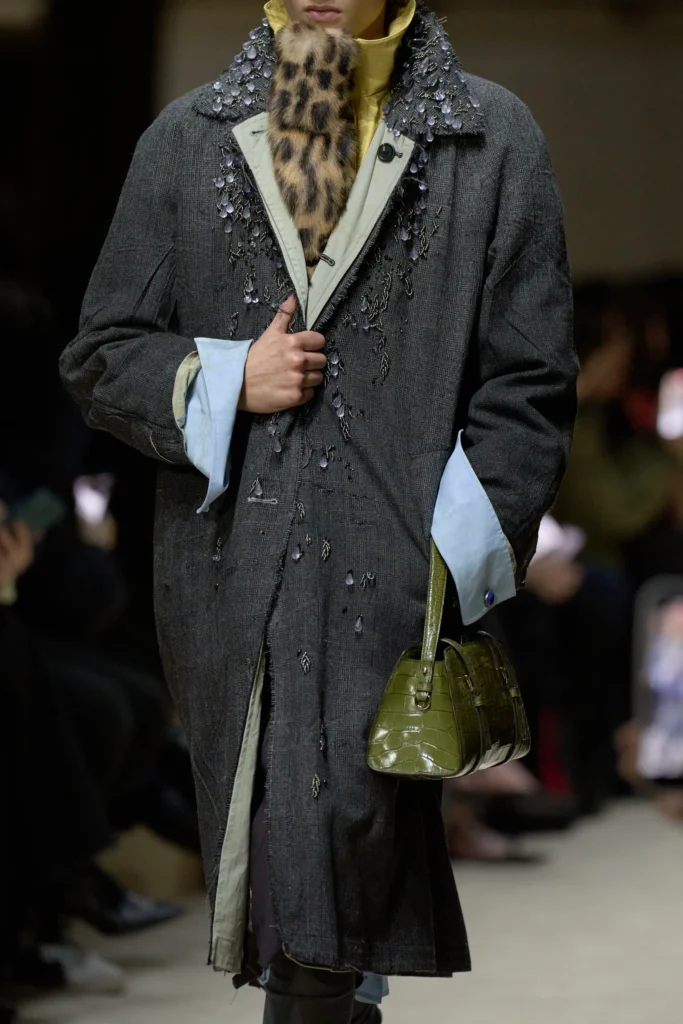
Instead of presenting strict wardrobe solutions, the collection offered suggestions. A crisp poplin shirt tucked into an embellished slip dress. A simple jacket that reveals crystal embroidery only on the inside. These combinations suggest freedom rather than instruction – the freedom to assemble clothing according to personal logic rather than prescribed trends.
Source – Vogue.