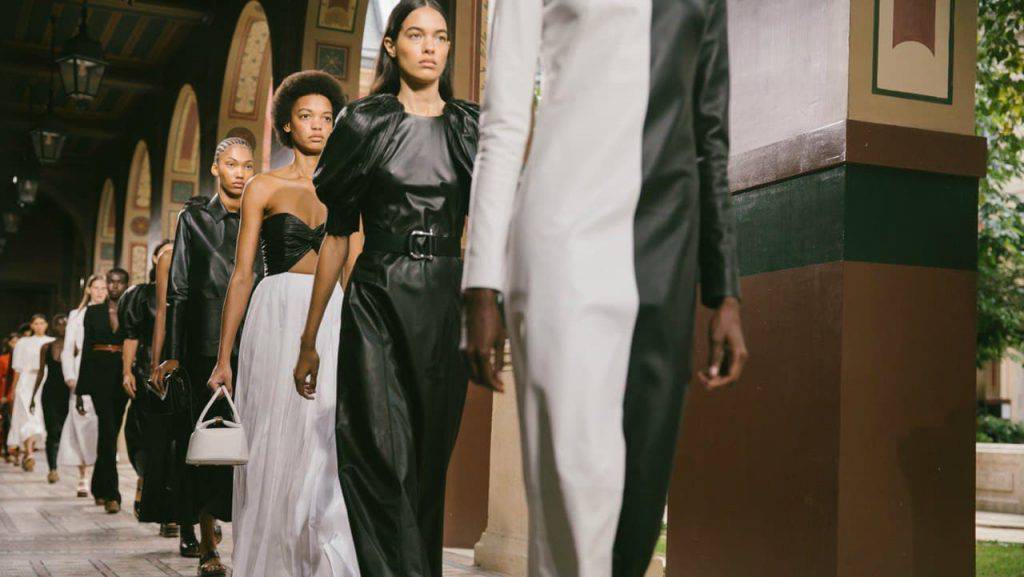
Jonathan Anderson presented his Dior Fall-Winter 2026 collection outdoors in the Tuileries Garden, turning the show into a kind of Parisian promenade. Under clear spring sunlight, the runway crossed a small bridge over a water-lily pond before circling a temporary glasshouse built for the audience. The setting captured the central idea of the collection – clothing designed for movement, for walking through the city, for being seen in everyday life.
The opening look immediately reframed one of Dior’s most recognizable silhouettes. The iconic Bar jacket appeared transformed into a soft grey knit cardigan, shortened and finished with a delicate peplum. It was paired with a multilayered white skirt resembling a light tutu, edged with scalloped layers and trailing slightly behind as the model moved. The look established the tone of the collection – familiar Dior codes interpreted with softness and ease.
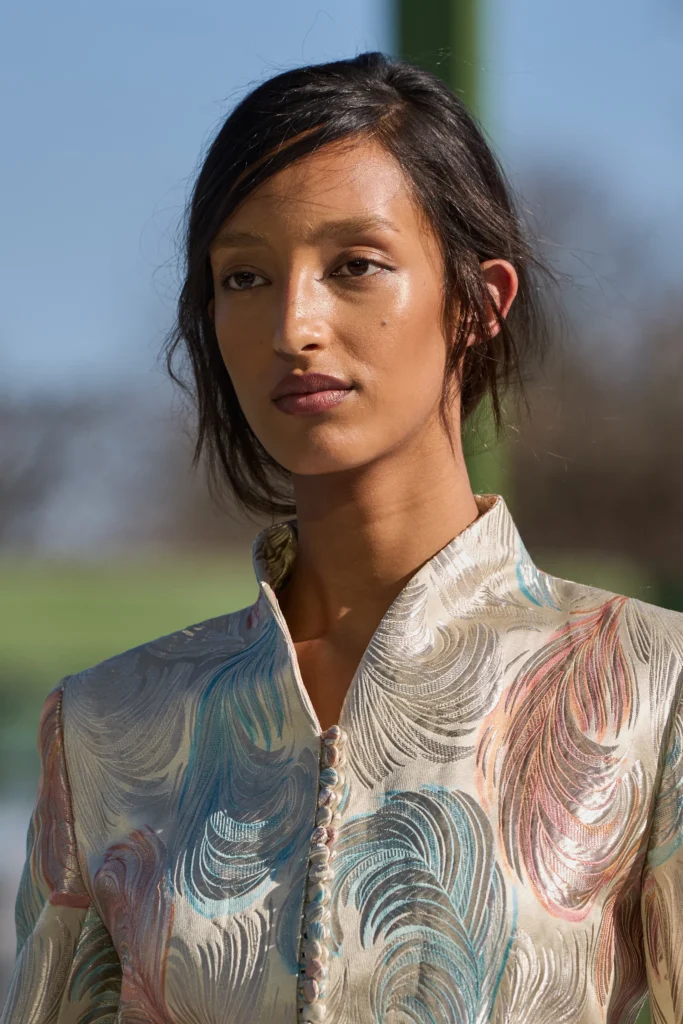
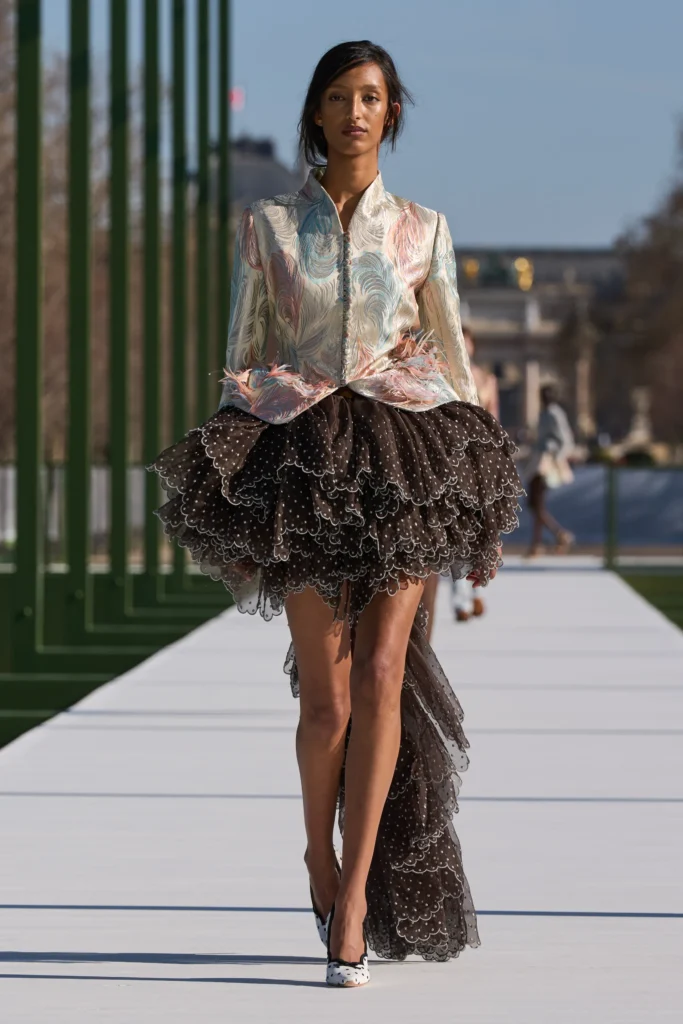
Anderson approached structure with restraint. Many garments were intentionally light, allowing fabric to move naturally. Menswear-inspired checks appeared not as rigid tailoring but as prints on finely pleated silk, turning suits into something that felt closer to a relaxed shirt-and-trouser combination. Coats wrapped around the body like dressing gowns. Although presented as a fall collection, Anderson described it as crossing seasons, with pieces arriving in stores as early as June.
Balancing Dior’s traditionally delicate femininity with a personal design language has always been a challenge for creative directors at the house. In this collection Anderson seemed more confident in that balance. Instead of pursuing multiple directions at once, he allowed ornate decoration and restrained simplicity to exist side by side.
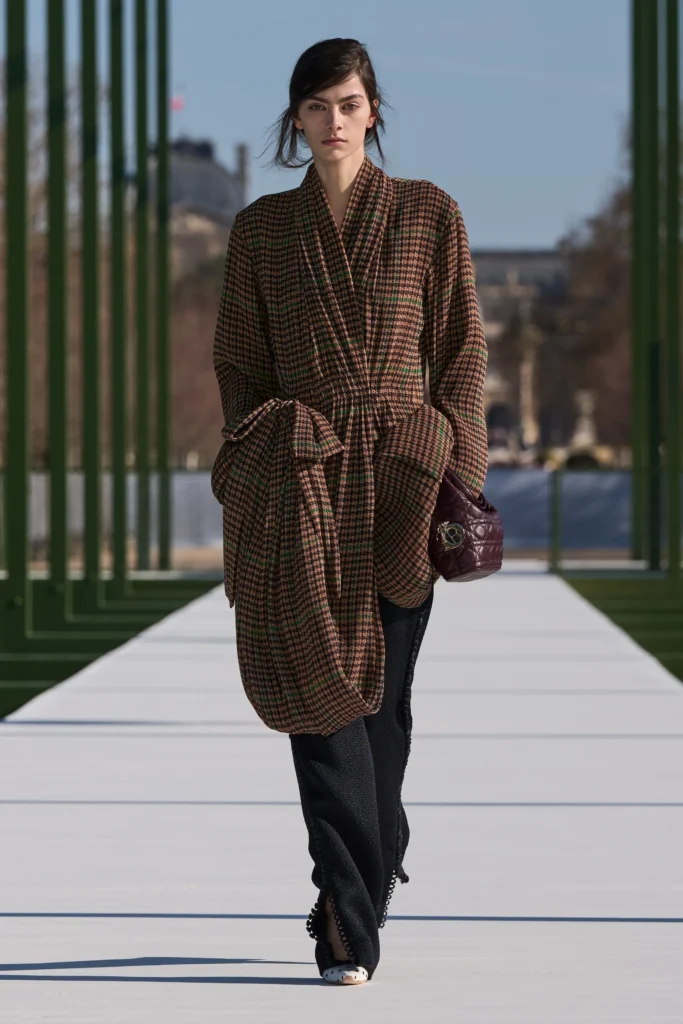
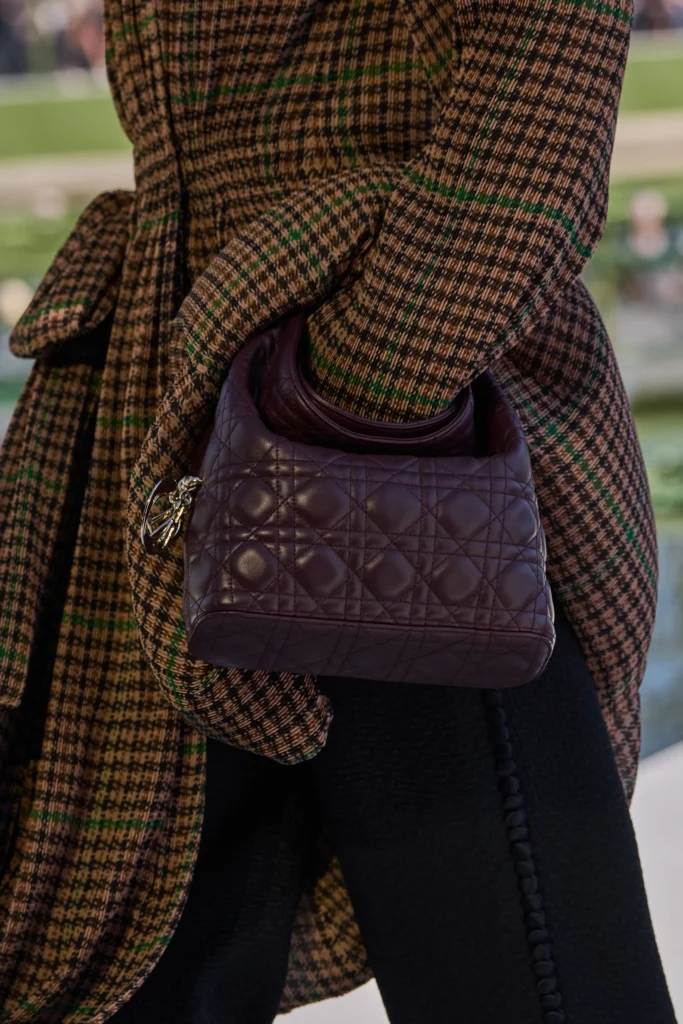
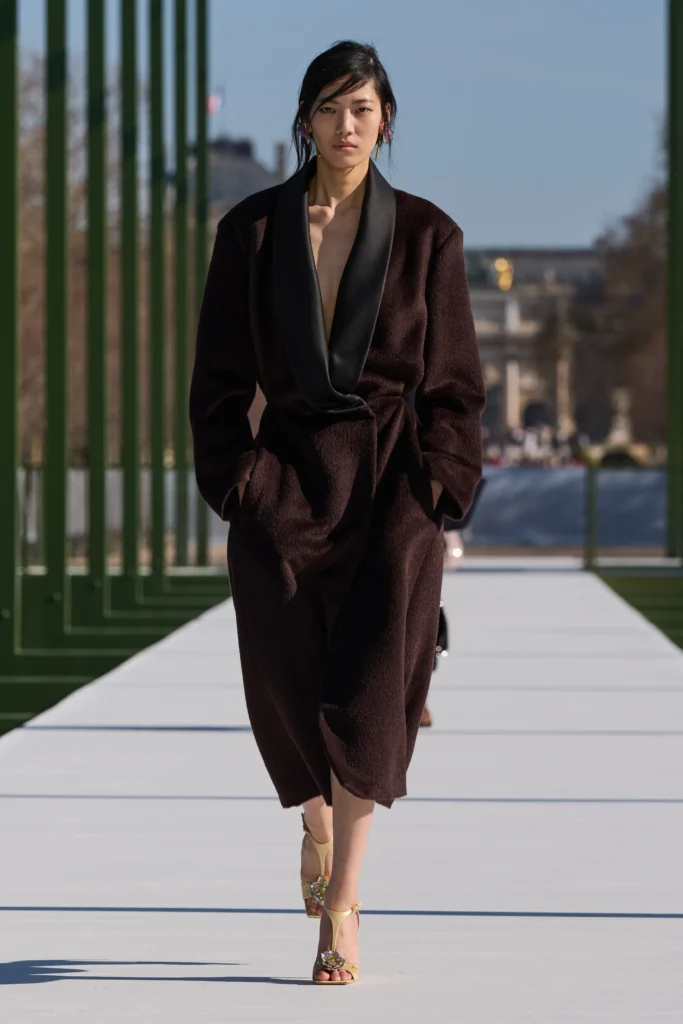
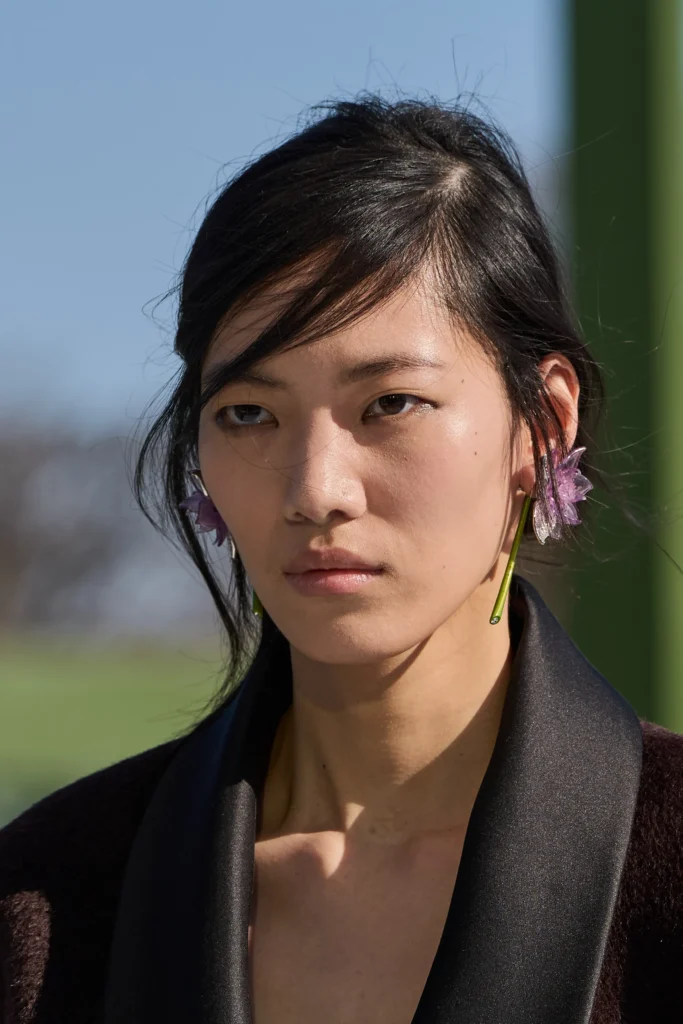
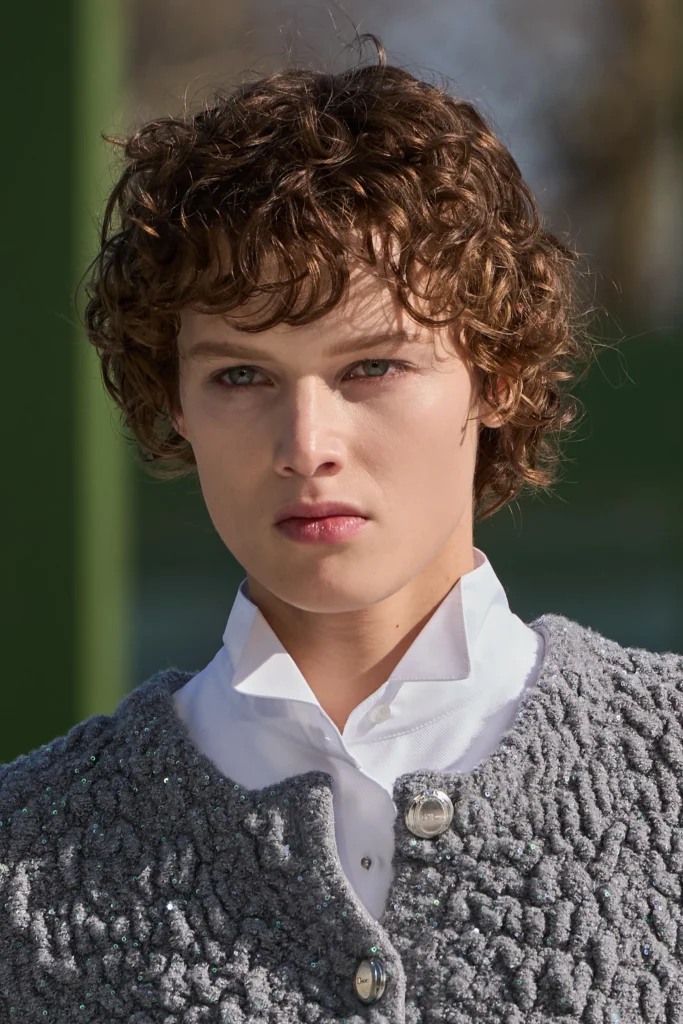
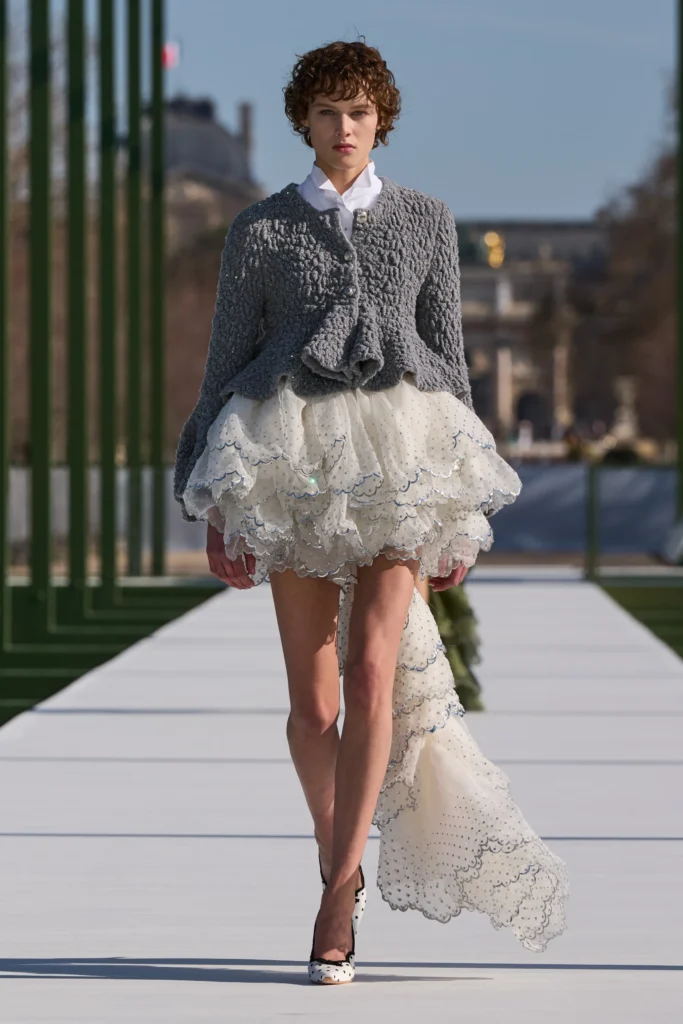
Several variations of the Bar jacket returned throughout the show, none rigid or corseted. One version appeared in gold lamé, asymmetrically draped and trimmed with shearling, paired unexpectedly with pale denim jeans embroidered with a silver scalloped pattern. The combination captured Anderson’s approach – merging Dior history with contemporary casual pieces. The embroidered motif referenced the house’s famous Junon gown from 1949, though the reference was subtle rather than literal.
The collection also hinted at influences beyond Dior’s archive. Balloon-shaped trousers and floral lamé fabrics evoked echoes of Paul Poiret, while elongated coats recalled 18th-century frock coats – a silhouette Anderson has explored repeatedly in his work. Some appeared with dramatic waterfall collars in shearling, others constructed entirely from structured lace.
Flowers, long associated with the house of Dior, appeared through a different lens. Instead of traditional floral motifs, Anderson drew inspiration from the water lilies floating in the Tuileries pond. Raffia flowers appeared on asymmetrical lace dresses, and delicate thong sandals echoed the shape of lily pads.
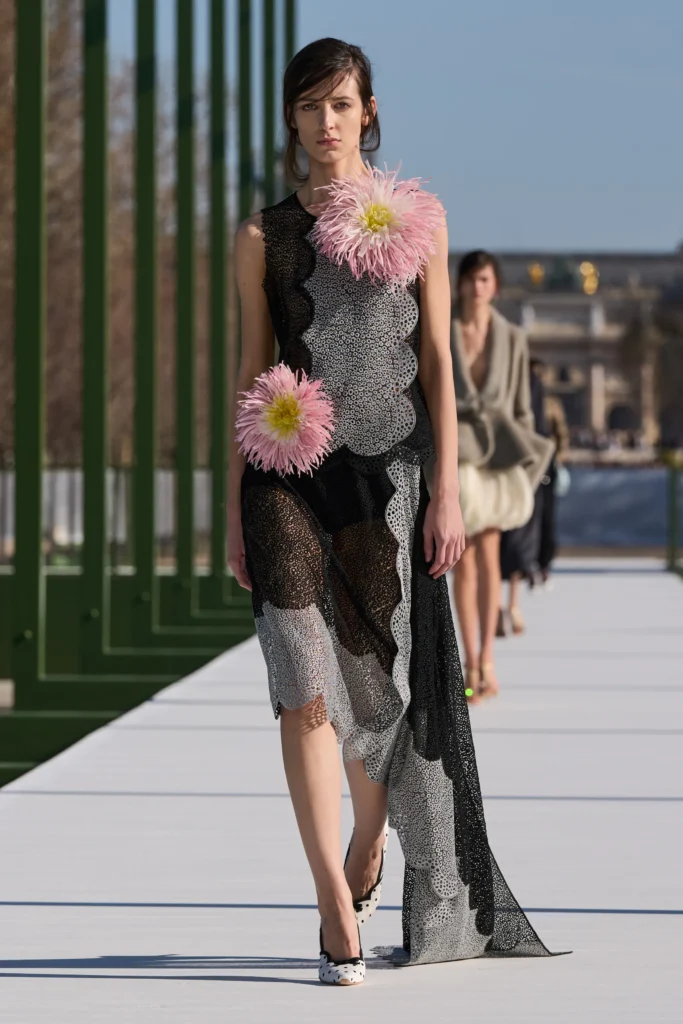
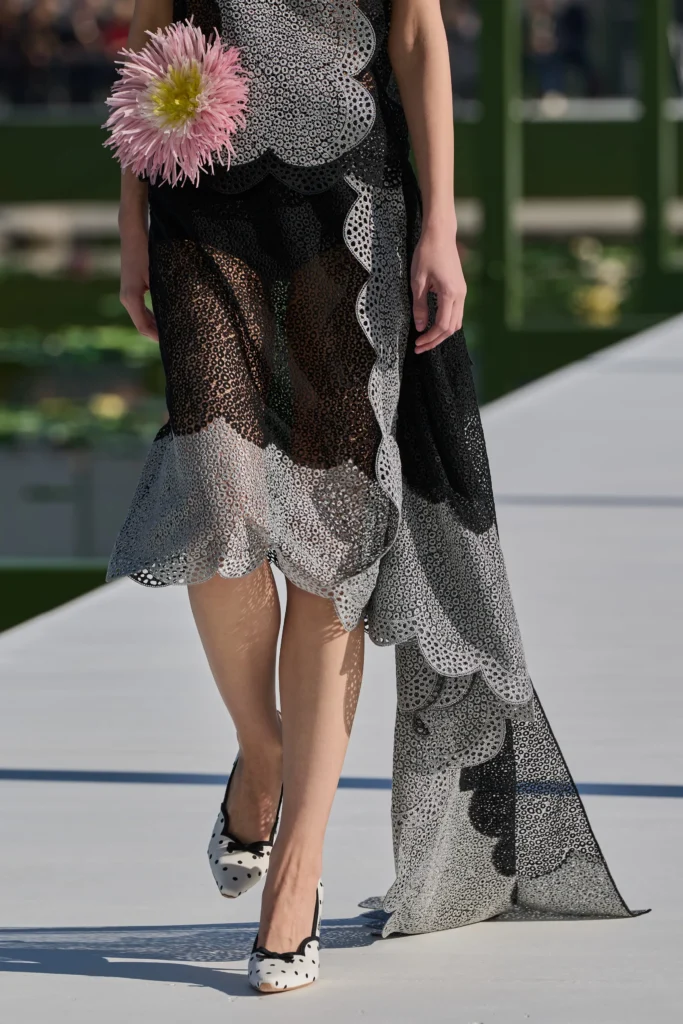
The location itself added another layer of meaning. From the glasshouse, the audience could see the Louvre in one direction and the obelisk of Place de la Concorde in the other. The setting connected Dior with the broader landscape of Parisian history and culture. The bridge and the lilies also recalled Monet’s garden at Giverny, whose paintings are displayed nearby at the Orangerie museum.
For Anderson, the show marked a moment of reassurance. After taking on one of fashion’s most influential houses, the collection demonstrated a clearer direction – one where Dior’s heritage, contemporary ease, and the atmosphere of Paris could exist within the same narrative.
Source – Vogue.