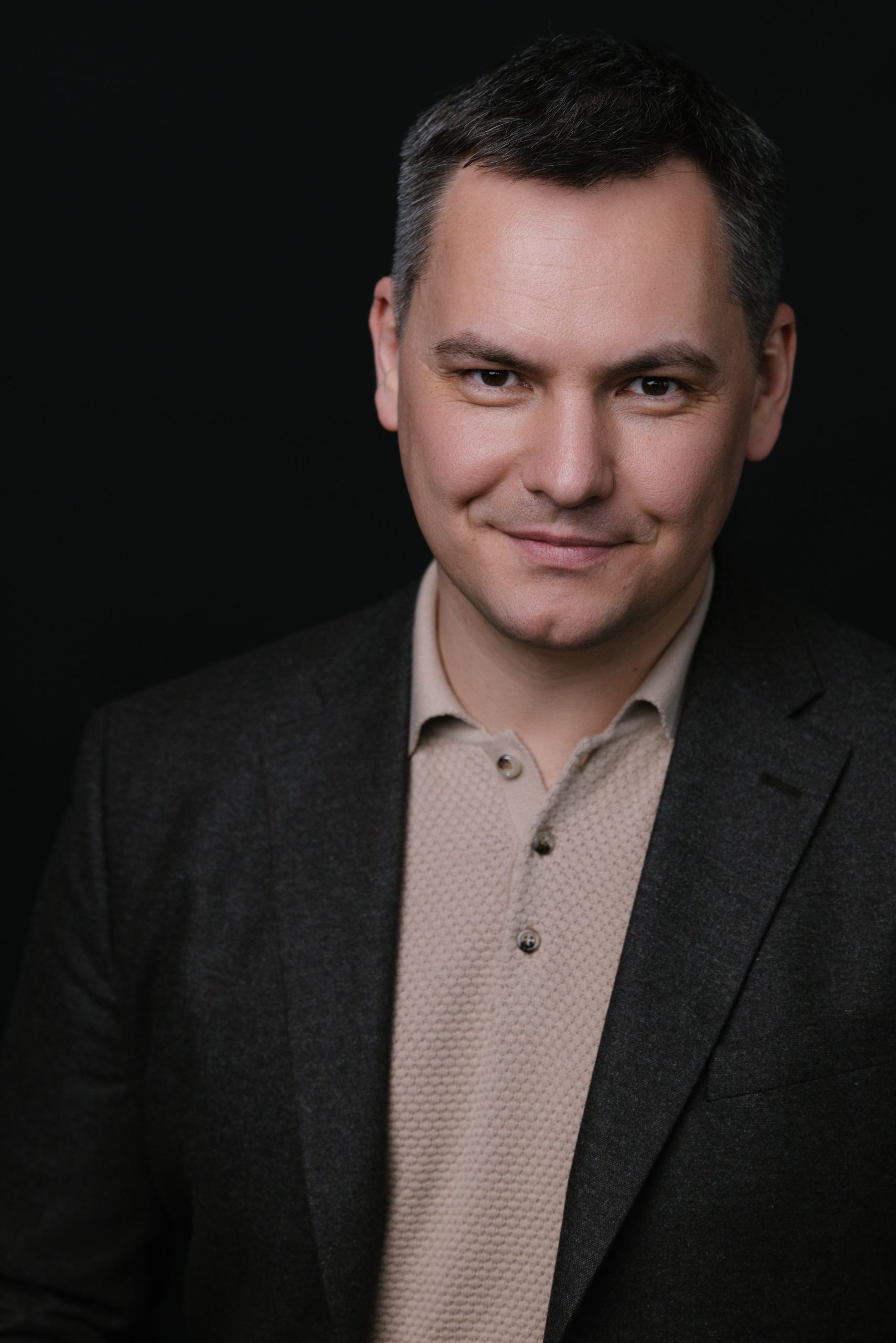
Valentin Shishkin is a kinetic image and nonverbal communication expert. With twenty years of experience, he is a business coach. In an interview with MOVER, he discussed the author’s methodology and how it can help people in business and in everyday life.
Valentin, you established the Kinetic Image School. Your resources state that the project is original and without precedent. Please elaborate on its distinctiveness and the meaning of- “Kinetic Image.”
The applicability is what makes it unique. There are numerous types of people. When we get to the point where we have to make a decision, it does not work or does not work very well. In this instance, we simulate the scenario, record it on video, and analyze every second to determine whether a person’s behavior helps or hinders. Like a wheel, uniqueness in simplicity and applicability is essential to progress.
How does a person change when he notices something is wrong from the outside?
The first thing he can do is change his behavior. For example, consider how we get up and sit down. We can stand with only one point of support, but our legs become weak and tense up. Alternatively, we can provide two points of support. You can move through the outer contour like a man or the inner contour like a woman.

When developing your methodology, who was your primary focus? Whom do you want to assist?
Everything began with a beauty pageant. For instance, a fashion model might walk the catwalk, but no one cheers for her. The one behind her is nearly indistinguishable, but they praise her. I frequently heard people speak of charisma, spirituality, and inner content. Not everything is simple: it depends on whether it shares an energy field with the hall. Although she is not naturally attractive, the way she moves and shares energy with the audience is exactly what makes people want to applaud, praise, and even vote for her.
With the help of your technique, you can solve a variety of life tasks: to impress people on the first meeting, to be pleasant in a new society, to change the impression of yourself in places where you have been known for a long time, to attract a status man and marry Can you provide any specific examples?
I’ll start with the first example. A 10-year-old boy was beaten and bruised at school. He arrived and stated that he no longer wanted to attend school. I showed him on video how his actions make other kids want to hit him. We worked for 20-25 minutes, and I demonstrated what makes him so selfless and what his behavior should be if he wants to be treated commonly. And he stopped coming home covered in bruises.
For more examples from practice and Alan Pease’s body language, the uniqueness of the methodology, and expanding business abroad, see our interview with Valentin Shishkin.