

Garden. Fog. Rain. And the silence that comes just before eternity. Dior returns to Rome — not as a guest, but as an heir.
On a spring night in Rome, Villa Albani-Torlonia emerged not as a venue, but as a time capsule. A private 18th-century estate hidden from most, its gardens became the setting for Maria Grazia Chiuri’s latest Dior Cruise show — her first in the Eternal City in a decade.
“It was a dream. And a fear,” Chiuri admitted, referring to her previous Roman show Mirabilia Romae, presented in 2015 while still at Valentino. Returning now with Dior, she wasn’t just staging a collection — she was opening a dialogue with the city that shaped her.
A Place that Speaks
The choice of venue said it all. Villa Albani-Torlonia, with its labyrinthine access and treasure trove of Greco-Roman antiquities, is rarely seen by the public. On this night, guests in an all-white dress code gathered among neoclassical statues and artificial fog, just as a soft rain began to fall. It stopped halfway through the show — as if giving way to the ritual.
This was more than fashion. It was a tribute — to Rome, to Cinecittà’s golden age, to the elegance of 1950s “la dolce vita,” and to the legacy of Italian women who shaped culture behind the scenes.
From Cardinals to Renaissance Heroines
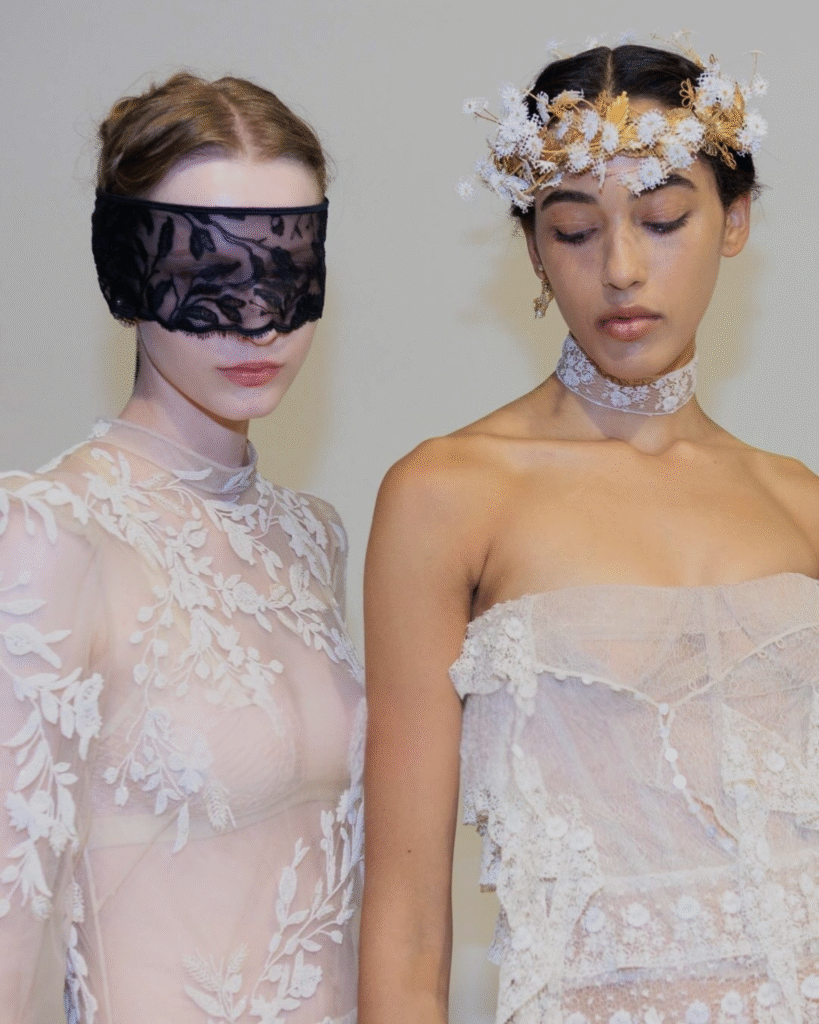
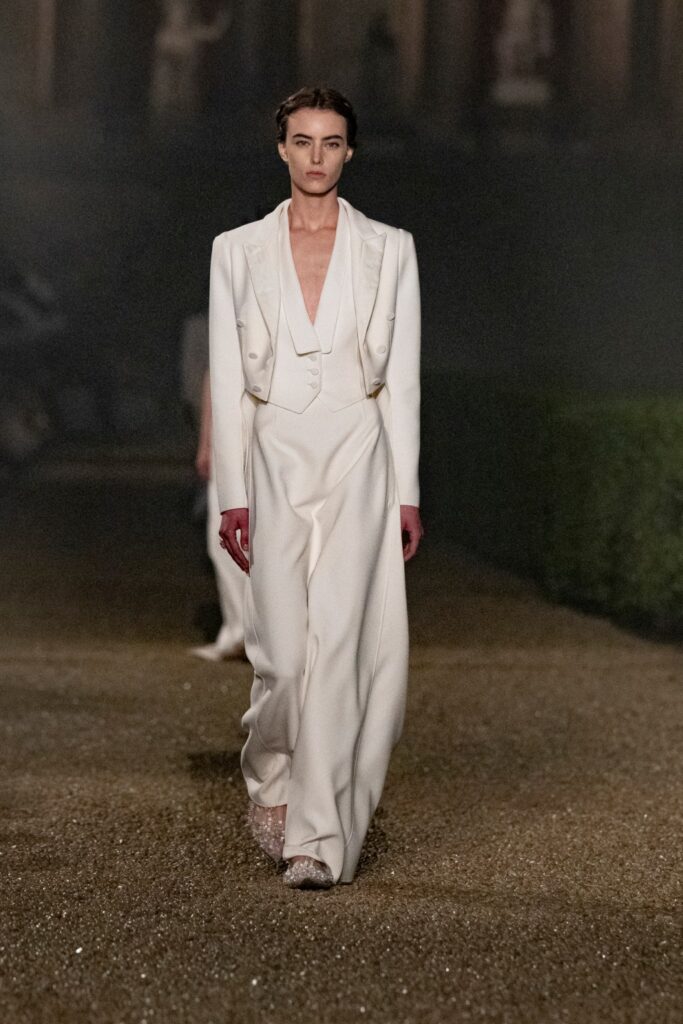
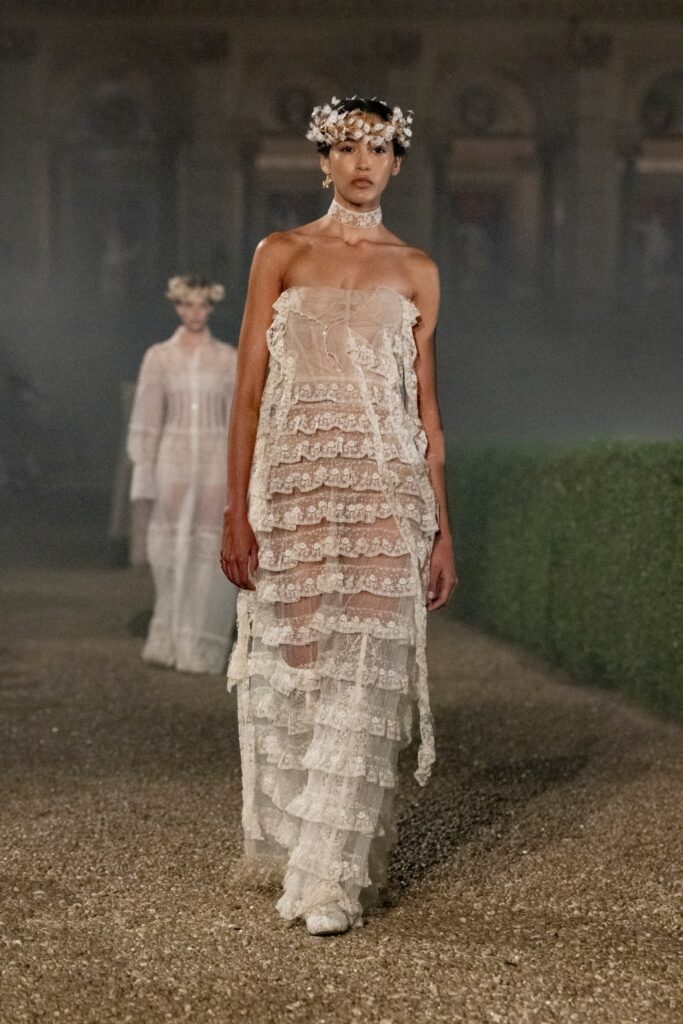
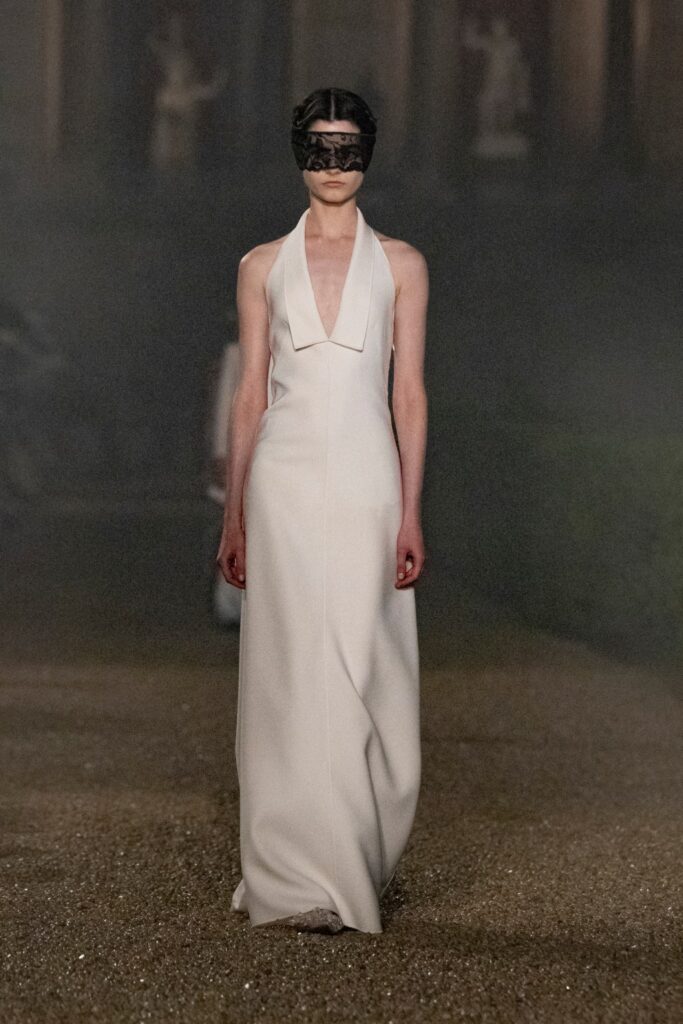
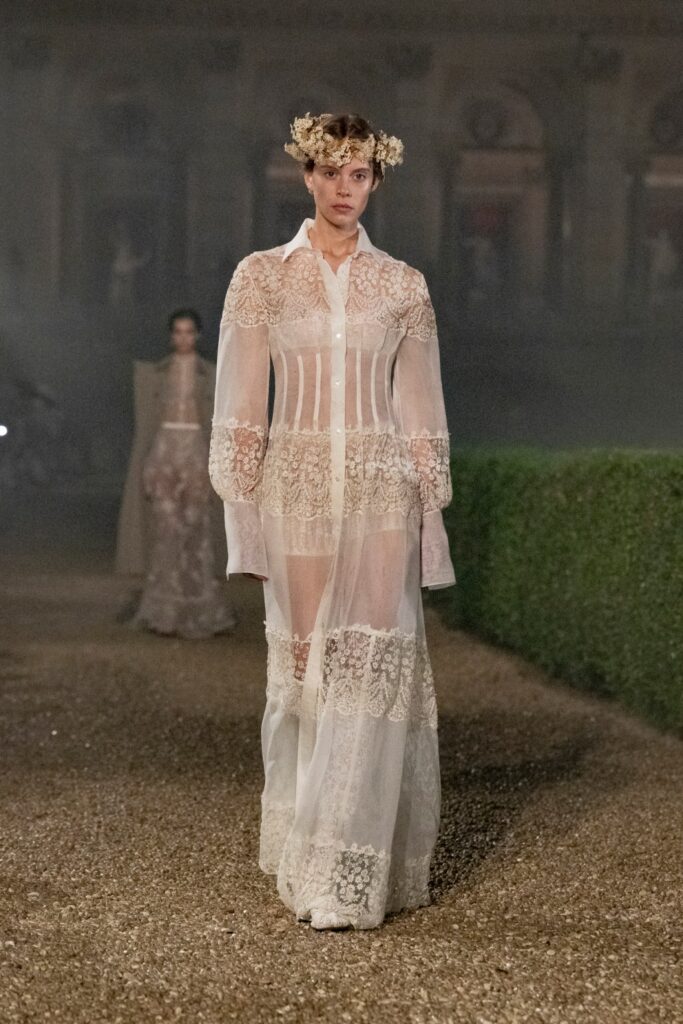
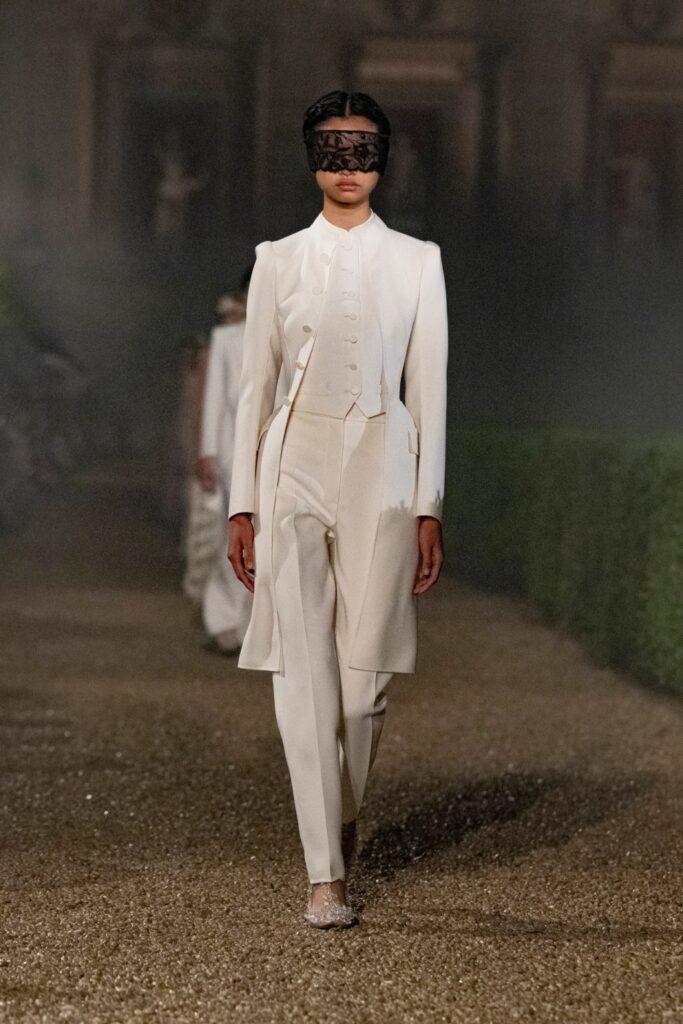
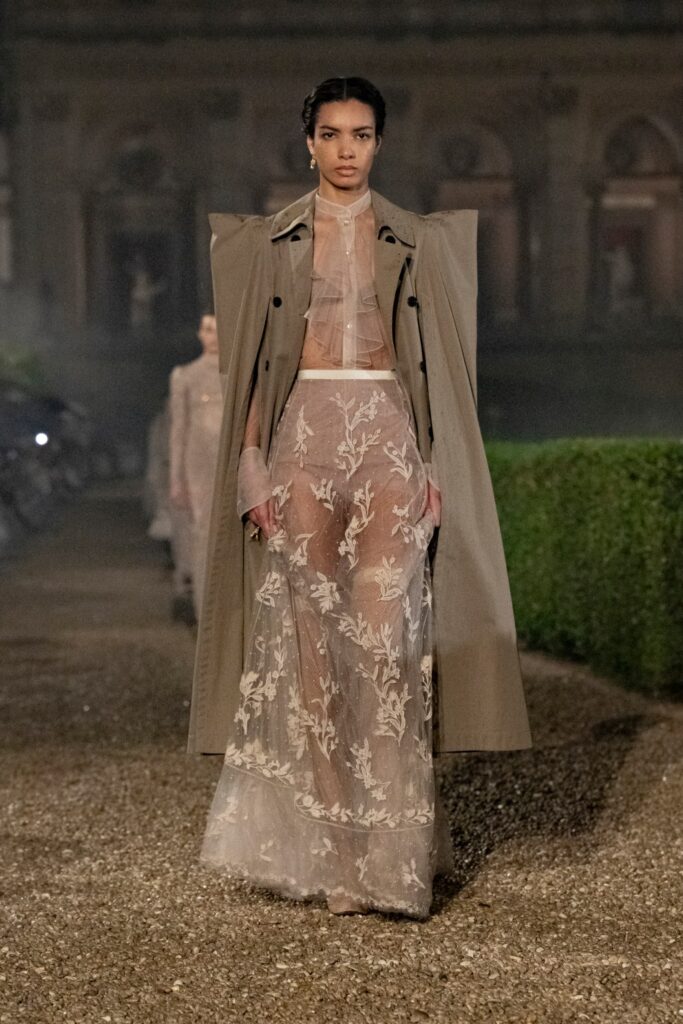
Chiuri’s designs captured Rome not through nostalgia, but through echoes. Ethereal sheer gowns in ivory and cream mingled with column-like silhouettes in deep burgundy and black velvet. A black lace dress was layered beneath a heavy cream wool cloak with military folds. Others wore structured capes, bold-shouldered jackets, or cream frock coats that subtly nodded to Marlene Dietrich.
Hints of Vatican regalia were unmistakable: short black jackets with red cardinal buttons, lace-trimmed white shirts reminiscent of priestly vestments. Toward the finale, the silhouettes turned radiant — draped in liquid gold velvet, or dressed in sculptural illusion beading that mimicked ancient marble statuary.
A Theatre Reborn
One of the most personal threads in the collection was the tribute to Mimì Pecci-Blunt, Roman salonnière and patron of avant-garde art. Chiuri, alongside her daughter Rachele, recently restored Pecci-Blunt’s theatre — Teatro di Cometa — giving the show a deeper resonance.
The experience was accompanied by a live performance from the Sinfonietta Orchestra, with music composed by Oliver Coates. Simultaneously, online viewers were offered a short film directed by Matteo Garrone — the third artistic collaboration between him and Chiuri. Cinematic yet intimate, the film deepened the show’s aura of sacred modernity.
What Remains
Dior didn’t use Rome as a backdrop. It became the protagonist. This wasn’t a fashion show — it was a love letter to a city. A study in memory. A return to the source.
In an era where fashion often seeks detachment from history, Chiuri moves in the opposite direction — toward depth, intimacy, and rooted beauty.
Mover’s note:
Dior Cruise 2026 isn’t nostalgic. It’s sacred. A journey of return. A whispered homage to the women, the stories, and the eternal power of a city that never stopped inspiring.